After Diets and GLPs Fail, Woman Drops 60 Pounds with Less-Invasive Endoscopic Procedure
By Rona Gindin, Editorial Contributor
Jayme Salerno was doing everything she could to lose weight: She walked up steps to her fourth-floor New York City home and all around the neighborhood, chose healthy foods and took classes at the gym. The pounds wouldn’t budge, and she began to suffer from a growing array of medical challenges.

The tipping point was when her blood pressure spiked “to stroke level” and her newly diagnosed polycystic ovary syndrome (PCOS) kept her hormones unpredictable.
“I realized this was really unhealthy and I needed to do something drastic,” she says.
The Struggle with Hypothyroidism and PCOS Weight Gain
Salerno’s medical journey began as a tween, when the “super-thin” girl started filling out. “I was always a very active person, but at 13 I was diagnosed with hypothyroidism, and ever since then, it was really tough to lose weight,” she says, noting that the thyroid issue affects hormones and weight.
“I went on so many fad diets, even a cookie diet. I tried diet pills. I’d go to workout classes. Here and there I’d lose like 20 pounds, but it always came back on in less than a month,” she says Her self-esteem was so low in high school that she didn’t date, and college wasn’t much better. “I hated how I looked.”
Moving from South Florida to her native New York during those years, Salerno couldn’t find a lifestyle that led to a right-size weight for her 5’5” frame, which peaked at 225 pounds with a 36 BMI. She and her doctors tried hormone supplements, a GLP-1 weight-loss medication and metformin, which helps control blood sugar.
“Nothing budged,” Salerno says. “I was drinking heavily at the time when I went out with my friends,” she admits, but chose good foods and kept moving.
By her mid-20s, while embracing an active single lifestyle and a career as a tech salesperson in the Big Apple, Salerno spent a lot of time in doctors’ offices. She was seeing a pulmonologist, an endocrinologist and a cardiologist.
Choosing Between Bariatric Surgery and Endoscopic Sleeve Gastroplasty
Salerno concluded that she would need a medical procedure to lose weight. Two years earlier, she had talked to Orlando Health Weight Loss and Bariatric Institute surgeon Dr. Andre Teixeira about options, including an endoscopic sleeve gastroplasty, or ESG.
I went on so many fad diets, even a cookie diet. I tried diet pills. I’d go to workout classes. — Jayme Salerno
An ESG involves sewing part of the stomach closed so it can’t hold much food. With ESG, the doctor would access Salerno’s stomach via a thin flexible tube inserted through the mouth, rather than cutting flesh and muscle as in a similar bariatric surgery.
Now, Salerno was ready to revisit an operation that would not change her actual body. At the time, she mistakenly thought that the ESG would not involve anesthesia, which is a key reason she researched that route. She spoke first with three doctors near her Manhattan home, then circled back to Dr. Teixeira, whose Orlando practice is near her mother’s and sister’s Central Florida residences. She felt comfortable with him and his dad-like vibe.
“Dr. Teixeira wasn’t pushy at all. And I liked that he is an actual bariatric surgeon, not a gastric doctor working at a med spa,” she says.
Salerno, now 29, cemented in her ESG choice. Although patients generally lose less weight with the endoscopic sleeve, it was right for Salerno. “The procedure is shorter, only 45 minutes. Your stomach is still intact. And, at this practice, it’s done in an endoscopic suite, not an operating room, which felt like the safer option for me.”
Dr. Teixeira fully supported her surgery choice. Her BMI was within the recommended range for this type of surgery. “Plus, she wanted as little done to her body as possible,” he says. “She did not want anything taken out of her or rerouted. She felt she just needed a tool to put her in the right direction. We agreed that we’d do the ESG and try something else, like a bariatric sleeve or bypass, two or three years down the line if necessary.”
Salerno nearly let her fear of anesthesia derail her decision. When she panicked, Dr. Teixeira calmly talked with her, invited her to reschedule and ultimately prescribed an anti-anxiety med. She had the procedure, woke up with little pain, and began her recovery. Afterward, Salerno followed a 21-day liquid diet and slowly worked back to eating regular foods. She stopped drinking alcohol for six months and now has rarely more than one drink a week.
Life After Endoscopic Sleeve Gastroplasty
Between the procedure, the required diet and, after 30 days, returning to workouts, Salerno is finally rid of the bulk that has troubled her for half her life.
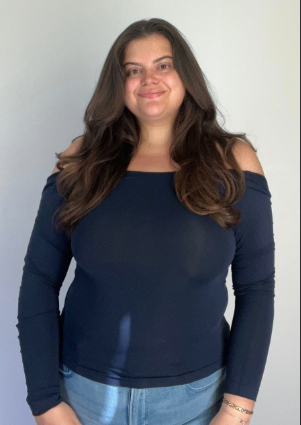
“The first few months, the weight was shedding like crazy. I once lost 10 pounds in four days,” she says. Ten months later, she is 60 pounds lighter, exceeding the standard for an endoscopic gastroplasty. She credits her “strict mindset.”
After recuperating, Salerno returned to NYC. “I still live my life. I go out to dinner with friends. I’m big on eating protein. I work out five days a week, maybe six, and I walk everywhere. I’m not starving myself; I listen to my hunger cues.”
Salerno’s medical conditions are improving. Her triglycerides, cholesterol, glucose and sodium numbers are moving in the right direction. Her mental health has had a boost too, which has led to way more dating.
Salerno gets credit for this success, Dr. Teixeira says. “After the surgery, she really changed her lifestyle. She became super active, changed her eating habits and followed up with virtual office visits, which kept her on the right track. She is getting the most out of her life now.”
Instead of buying apparel up to an extra-extra large, Salerno picks up mediums off the rack. She’s eyeing tank tops for the first time and eagerly awaits spring so she can wear shorts. “My legs look night-and-day different.”
Salerno, is glad she chose the ESG, which she had questioned after people in online chat groups said they’d dropped 20 pounds or less.
“I have such confidence now,” she says. “It changed my life.”

 Hand Injury Prevention: How To Protect Your Hands at Work