Beating Chronic Pain: Karate Champion’s Journey Through 100-Lb. Weight Loss and Hip Surgery
By Mary Frances Emmons, Editorial Contributor
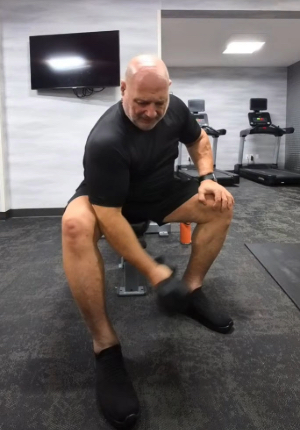
On a trip to Iceland, Scotland and England, Robert Vanelli had to pause whenever his group stopped at a point of interest. “Do me a favor, scout that out and tell me if there’s anything worth it up there,” he would ask his friends. For every tempting vista, he had to decide: “Is it really worth the intense pain?”
A three-time Triple Crown karate champion by the age of 18, by late middle age Vanelli’s weight had bloomed to 330 pounds. The cartilage in his hips was ground to nothing. He often had to use a wheelchair.
Finally, he had to face facts: Hip replacement surgery was his only option. But first he faced a greater problem: losing 100 pounds.
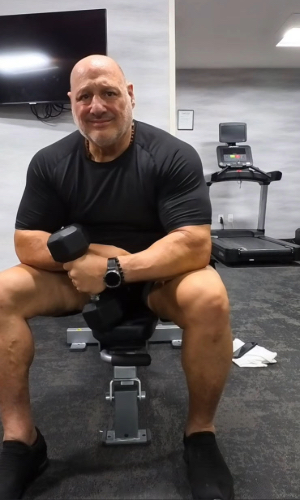
It was a reckoning for Vanelli, 60, a photographer, teacher, author and owner of a martial arts school who keeps a schedule that would exhaust a man half his age. But somewhere along the way, he lost focus on his most important asset: his health.
Preparing for Hip Surgery Through Nutrition
Before Vanelli could even consider surgery, his primary care physician told him he would have to lose at least 30 pounds.
Dr. Kenneth Sands, an orthopedic surgeon with Orlando Health Jewett Orthopedic Institute in Melbourne, told Vanelli the same thing: he had to lose weight before Dr. Sands could do the hip replacement surgeries.
Vanelli, motivated, dropped more than 100 pounds over the next six months or so.
“I lost all that weight through nutrition, water and sleep,” he says. “No working out, just pool-walking and the sauna. I didn’t do traditional workouts.” Instead, his goal was to get himself ready for the exercise therapy he eventually would need to do post-surgery.
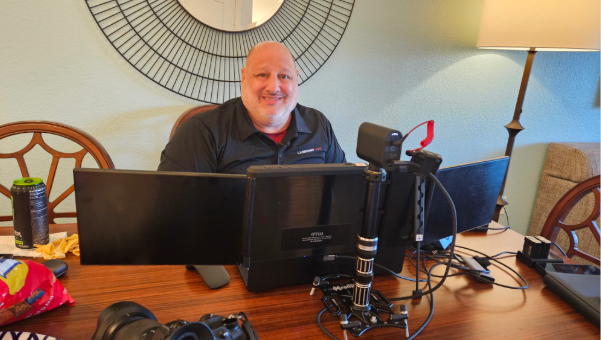
He also swore off fast food and learned to cook.
“I found people to teach me how to make everything, any delicacy you like,” he says. “Then I wrote a little AI app that said, ‘Make this 1,300-calorie meal healthy.’ ” He puts what he calls his “holy quartet” — flax seed, chia seed, nutritional yeast and hemp hearts — in everything. When he wants more umami, he adds powdered bone broth.
Meal prepping became essential, and he learned to make things simple wherever he could, like buying pre-chopped garlic. Most importantly, he became choosier about portions — and people.

“All the Italian cookies my grandmother used to make — why would I not enjoy them? The difference is portion control. I said to my nephew over the holidays, ‘Do you love me? Eat the other half of this cookie.’ ”
Vanelli still got to enjoy a beloved holiday treat, “just not sitting in front of the TV eating 10 of them.”
“Get away from people who say one more won’t hurt you,” he says. “They make it much harder to stick with it. Something like this can be done if you surround yourself with the right people.”

By April 2025, he was ready for surgery.
Benefits of Muscle-Sparing Hip Replacement
Vanelli lists his medical team at the top of those important people.
“Dr. Sands and the group were with me every step of the way,” Vanelli says. From his first meeting with them, he felt like “wow, I’m really going to get something done here.”
“The way we do our hip replacements is we don’t cut any muscles,” Dr. Sands explains. “It’s a muscle-sparing operation, which means a faster recovery. Also, we come in from the front, which reduces the chances of complications with dislocations.”
After Vanelli’s first hip replacement, he was up and walking around 30 minutes after surgery. By the time he came in for the other hip in June, Dr. Sands says, “he looked like a completely different person.”
An amazing triumph of mind over matter. When it clicked that he needed to turn his life around, he did an amazing job.— Orthopedic surgeon Dr. Kenneth Sands
“An amazing triumph of mind over matter,” says Dr. Sands of Vanelli’s transformation. “When it clicked that he needed to turn his life around, he did an amazing job.”
Hip Replacement Recovery: Balancing Activity
Recovery from hip-replacement surgery isn’t easy, but “it’s usually a pleasant surprise” compared to most people’s expectations,” says Dr. Sands, who is a pioneer in advanced joint replacement techniques. “Once they feel better, they just want to move, move, move, to get back to what they’ve missed out on.”
But there can be too much of a good thing. Dr. Sands recalls patients who immediately went skydiving (no) or scuba diving (big no). Vanelli credits Julie Crossett, an advanced-practice registered nurse in Dr. Sands’ office, with helping him understand where the guiderails were — just because you can do something doesn’t mean you should.
“Look at your new hips like the tires on your car,” she told him. “The warranty is 30K, but if you skid or peel out, you’re not going to get to that. You decide how much wear and tear.”

Vanelli promptly shifted from heavy to lighter weights and increased reps — everything done gradually, slow and steady, no high-intensity workouts. He has increased by 23 percent the muscle mass he lost with the weight.
He would talk to the team about any questions, he says, “and they would guide me in the right direction.”
Life After Surgery: Returning to an Active Lifestyle
“People say you’re much happier now,” Vanelli says with a laugh. “I was always happy. I’m just not in pain now!”
He gets to the gym every day by 5:30 a.m. and stays until 8 — “that’s my ‘me’ time.”
He says he’s physically at about 90 percent of where he was in his ‘30s — by June he expects to be back to his karate training routines. For now, he’s much more active, able to keep up with his beloved nieces, nephews and 13 godchildren.
His advice? “Don’t dwell on the negatives. Learn to love where you’re at now.” And don’t base your happiness on some future goal. “Look at where you want to be and go as far as you can see — when you get there, you’ll see you can go further.”

 When Is It Safe to Return to Play? A Guide to Pediatric Sports Injury Recovery